
When it comes to providing assistance in emergencies, having the right training is crucial. In the UK, there are a variety of first aid courses designed to equip individuals with the necessary skills and knowledge to handle medical emergencies. Among the most common are the One-Day Emergency First Aid Course, the Three-Day First Aid at Work Course, and the Five-Day First Responder on Scene Course.
1. One-Day Emergency First Aid Course (EFA)
The One-Day Emergency (sometimes called Elementary) First Aid Course is an introductory course aimed at individuals who need a basic understanding of first aid. It’s often suitable for smaller workplaces or individuals who want to be prepared for emergencies at home or in a community setting.
This course covers essential first aid skills such as performing CPR, dealing with choking, controlling bleeding, and providing basic care for injuries. The training is hands-on, allowing participants to practice using bandages and other medical supplies. Participants will learn how to assess a casualty’s condition and how to react to a range of emergency situations.
- Duration: 1 day (usually 6 hours).
- Ideal for: Small workplaces, community groups, or individuals who need basic first aid knowledge.
- Key Skills: CPR, managing unresponsive casualties, dealing with bleeding, burns, and shock.
2. Three-Day First Aid at Work Course (FAW)
The Three-Day First Aid at Work Course is more comprehensive and is a legal requirement for employers in many industries, especially those with larger workforces or higher risk environments. This course builds upon the basics covered in the one-day course, diving deeper into various medical emergencies, and giving learners the confidence to respond effectively in a work environment.
The course is designed to equip first-aiders with the skills needed to handle serious injuries and illnesses in the workplace. It covers everything from assessing casualties and treating burns to handling workplace-specific emergencies like fainting, chest pains, and fractures. Participants also learn how to use an automated external defibrillator (AED) and how to manage a range of medical conditions like asthma attacks or diabetic emergencies.
- Duration: 3 days (18 hours).
- Ideal for: Employers, larger workforces, high-risk environments.
- Key Skills: Handling serious injuries, managing medical conditions, using AEDs, accident reporting (RIDDOR) and providing first aid in the workplace.
3. Five-Day First Responder on Scene Course (FREC, FROSI, FPOSI)
The Five-Day First Responder on Scene Course offers the most advanced and in-depth first aid training of the three. This course is designed for individuals who may be the first to arrive at an emergency scene, such as those working in remote areas, security personnel, or anyone who may be responsible for responding to critical incidents.
This course covers all the skills of the previous two but goes much further in-depth. Learners will gain the ability to manage life-threatening injuries, perform advanced airway management, use oxygen therapy, and handle severe trauma. One of the most crucial aspects of this course is the training in administering medical gases, particularly oxygen, which is vital in many emergency situations.
Oxygen is often a life-saving intervention in emergencies involving respiratory distress, shock, or trauma. Learners are trained to recognize signs that a casualty may require oxygen, such as difficulty breathing, rapid heart rate, or low oxygen saturation levels. They also learn how to assess the situation to determine the most appropriate method of oxygen delivery, including:
- Oxygen cylinders: Participants learn how to handle and use oxygen cylinders, ensuring they are safely connected to the patient and that the appropriate flow rates are set based on the casualty’s condition.
- Non-rebreather masks: This mask is commonly used for patients requiring high concentrations of oxygen. First responders are trained in fitting the mask correctly to ensure effective oxygen delivery while minimizing the risk of contamination.
- Nasal cannulas: In situations where a lower concentration of oxygen is required, first responders learn how to use nasal cannulas, which provide a continuous supply of oxygen through the nose.
- Bag-valve masks (BVM): For patients who are not breathing effectively or who have stopped breathing, BVMs are used in conjunction with CPR to deliver oxygen directly to the lungs. First responders are trained in the use of these devices to ensure that the airway is kept clear and the patient receives adequate ventilation.
By learning how to administer oxygen safely and effectively, first responders are able to provide critical support until professional medical help arrives. The course also covers safety precautions when using medical gases, ensuring that responders understand the risks of incorrect usage and how to prevent accidents such as oxygen toxicity or fire hazards.
In addition to oxygen therapy, the Five-Day course also prepares learners to deal with complex situations like multiple casualties or those involving hazardous environments, where advanced skills in trauma care and airway management are required.
- Duration: 5 days (30 hours).
- Ideal for: First responders, emergency services, remote workers, and those with heightened medical responsibilities.
- Key Skills: Advanced airway management, oxygen therapy (including the use of oxygen cylinders, masks, nasal cannulas, and BVMs), trauma care, and managing complex emergency situations.
First Aid and Scuba Diving
For scuba divers on remote expeditions, where you are the expedition leader responsible for medical response or if you are diving in the UK for work, the Five-Day First Responder on Scene Course is ideal (although FAW is normally the legal minimum requirement). The course provides the advanced skills necessary to handle medical emergencies in remote or high-risk environments, such as underwater or on remote dive sites. Scuba divers often face unique challenges, including decompression sickness, trauma, and breathing emergencies. The course covers critical topics like oxygen therapy, advanced airway management, and trauma care, which are essential for managing dive-related injuries and providing life-saving support until professional help arrives; however, it doesn’t cover specialist scuba diving topics that you learn in advanced diving courses (e.g., PADI Rescue and Divemaster). Combining training ensures divers are equipped to respond confidently in emergencies while away from immediate medical assistance.

Trauma Kit Bag
A trauma kit bag should include essential tools for managing serious injuries in emergencies. Key items to include are:
- Adhesive bandages for small cuts and abrasions
- Sterile gauze pads and dressing for wound care
- Trauma shears for cutting clothing and bandages
- Tourniquets for controlling severe bleeding
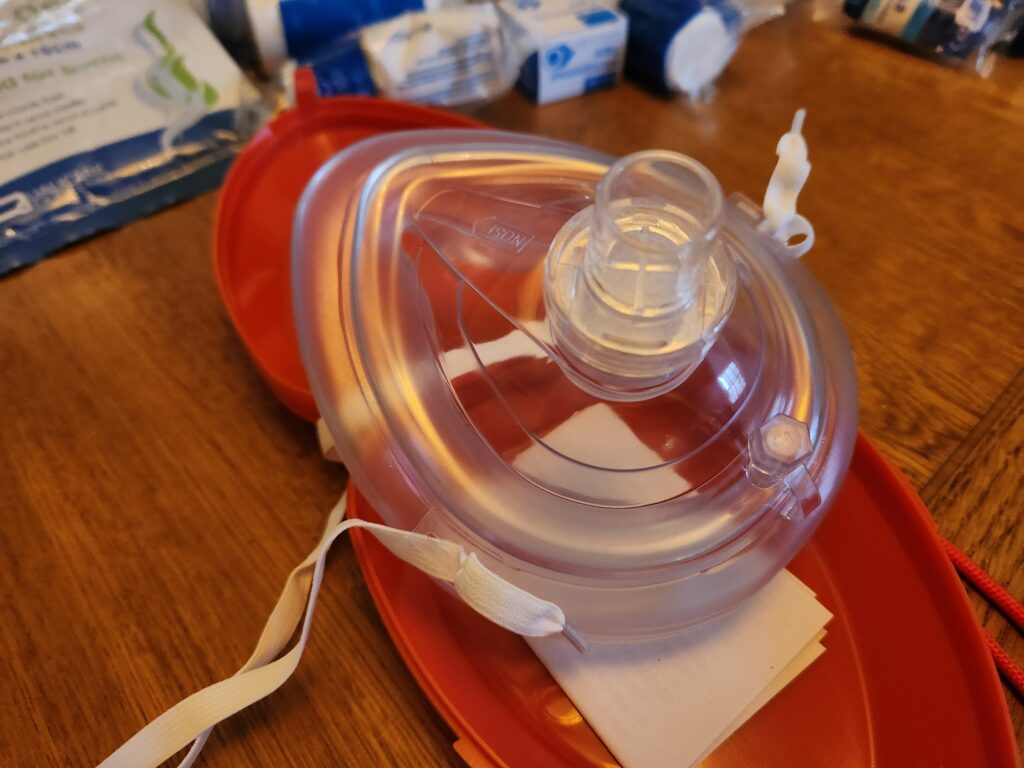
- CPR face shield for safe resuscitation
- Burn dressings for treating burns
- Elastic bandages for sprains or strains
- Instant cold packs for swelling or bruising
- Oxygen mask and nasal cannulas (if trained in oxygen administration)
- Gloves for protection and hygiene
These tools ensure you’re prepared for a range of traumatic injuries in emergencies.
FREC, FPOSI or FROSI?
Several recognized agencies certify Level 4 first aid qualifications, each with specific focuses. FREC (First Response Emergency Care) courses, certified by Qualsafe Awards and Skills for Health, provide comprehensive training in responding to medical emergencies, including trauma care, advanced life support, and oxygen therapy. FPOS-I (First Person on Scene – Intermediate), certified by QNUK (Ofqual), focuses on pre-hospital care skills for those in higher-risk roles, such as security or remote workers. FROSI (First Responder on Scene – Intermediate), certified by Future Quals, offers in-depth training for those facing complex emergency situations, including advanced airway management and medical gas administration. These qualifications generally require renewal every 3 years to ensure skills and knowledge are up-to-date and effective in real-life emergencies. Renewal typically involves attending a refresher course or assessment.
For those pursuing a career in paramedicine, FREC provides a clear pathway to more advanced paramedic qualifications. After completing Level 4 FREC, individuals can progress to higher-level courses like FREC 5 or other accredited paramedic training programs, eventually leading to the full Paramedic qualification. This pathway offers practical, pre-hospital care experience that supports the transition into more advanced roles in emergency medical services.
CitizenAID App: A Lifesaver in Emergency Situations
There are a few apps for use on smart phones and one that was recommended during my FROSI course was CitizenAID. The CitizenAID app is a powerful tool designed to guide individuals through medical emergencies, from accidents to attacks. Offering step-by-step instructions for trauma care, it helps users administer first aid before professional help arrives. The app provides clear visuals and audio cues, making it accessible even for those with no medical training. It also includes vital information on how to assess injuries, control bleeding, and perform CPR. It’s definitely worth considering downloading such an app to guide you through an emergency situation, especially if you aren’t regularly involved in emergency care.
Conclusion
Each of these first aid courses provides a unique set of skills tailored to different environments and needs. The One-Day Emergency First Aid Course is perfect for those looking for a basic introduction, the Three-Day First Aid at Work Course is ideal for employers and employees in high-risk workplaces, while the Five-Day First Responder on Scene Course is the most extensive, catering to individuals in critical response roles. By choosing the right course, you’ll ensure you have the necessary skills to act quickly and effectively in an emergency.