
AGU’s Ocean Sciences Meeting left the US for the first time and arrived in SEC Glasgow this year. Around 6000 delegates from all over the world came to share their research on anything and everything ocean-related. The variety was truly fascinating; you could find sessions on AMOC (Atlantic Meridional Overturning Circulation), plankton, coral bleaching and restoration, microplastics, ROVs and a whole host of sensors, fishing policies, AI and image processing, marine biology, marine art and teaching, and many more.
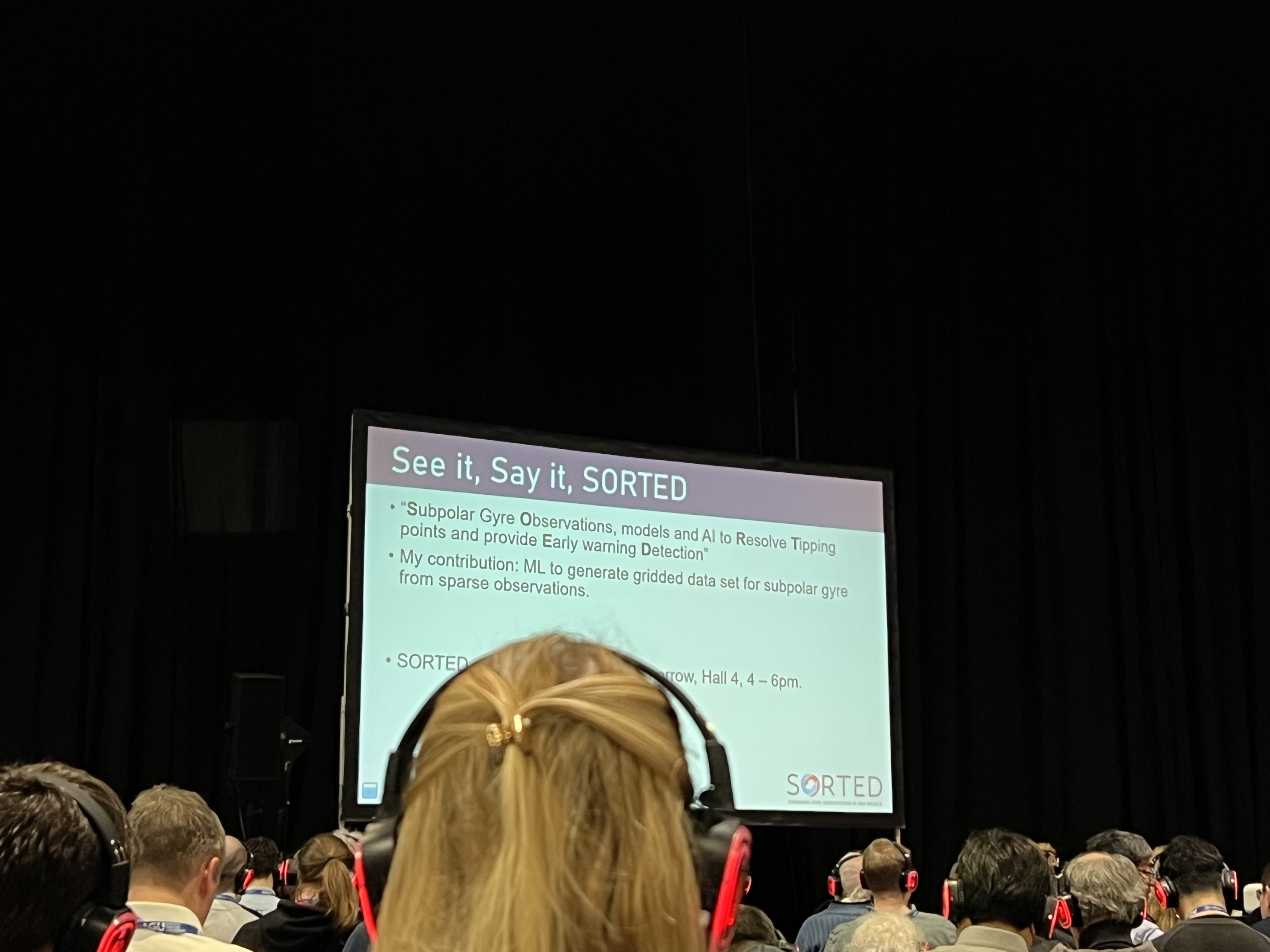
Due to its size and number of sessions at any one time, the conference spanned all available space in SEC and Armadillo as well. Particularly interesting were the 8 parallel sessions running in the same hall, meaning everyone had to wear headphones tuned into the session they wanted to watch. This created quite a unique conference-style silent disco.
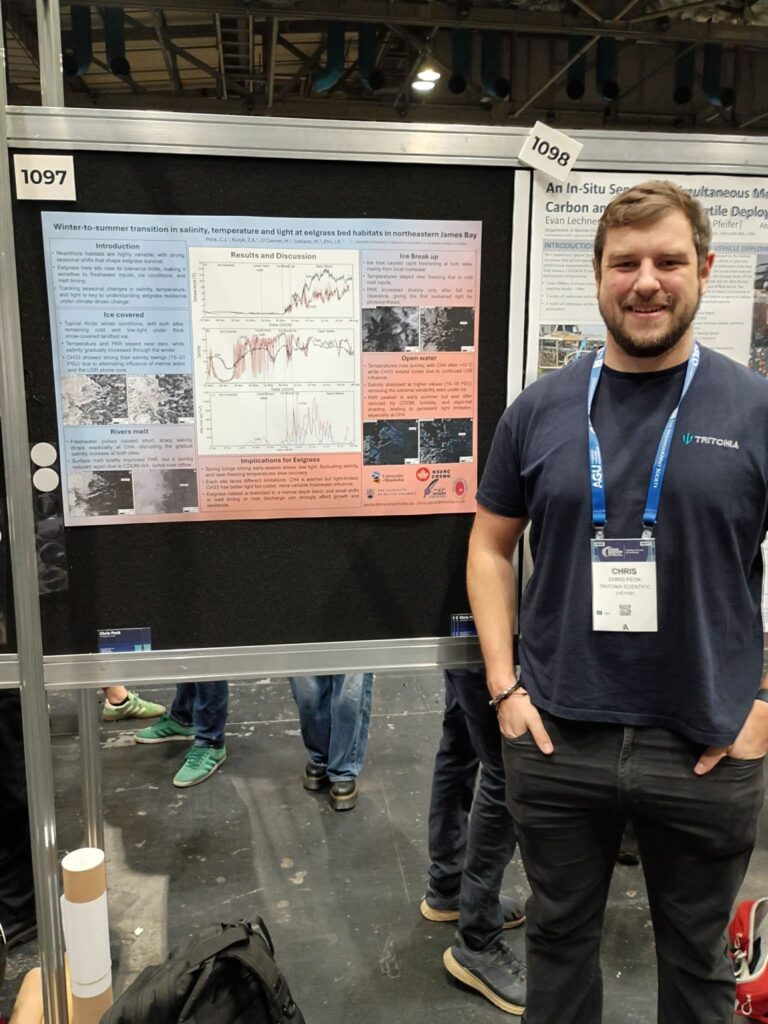
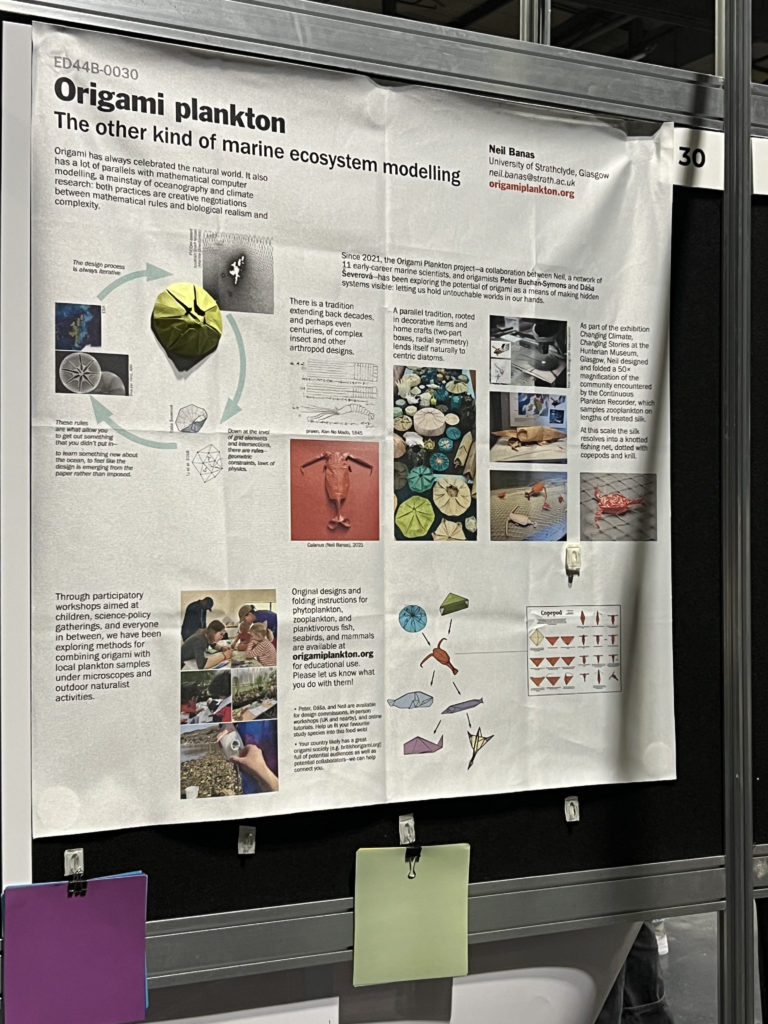
The poster hall featured a truly colossal number of posters. The spaces were numbered from 1 to 2038, but this doesn’t account for the posters swapping multiple times during the week. While difficult to look for a specific poster/ session, this also meant I stumbled into lots of interesting research too.
The entire conference featured only two plenary talks: one on mixoplankton by Dr Aditee Mitra and one on AMOC by Prof Eleanor Frajka-Williams. And while both presentations were outside the topics I’m familiar with, the speakers did a great job making the talks accessible even to someone without a marine science background.
.
.
.
.
.
.
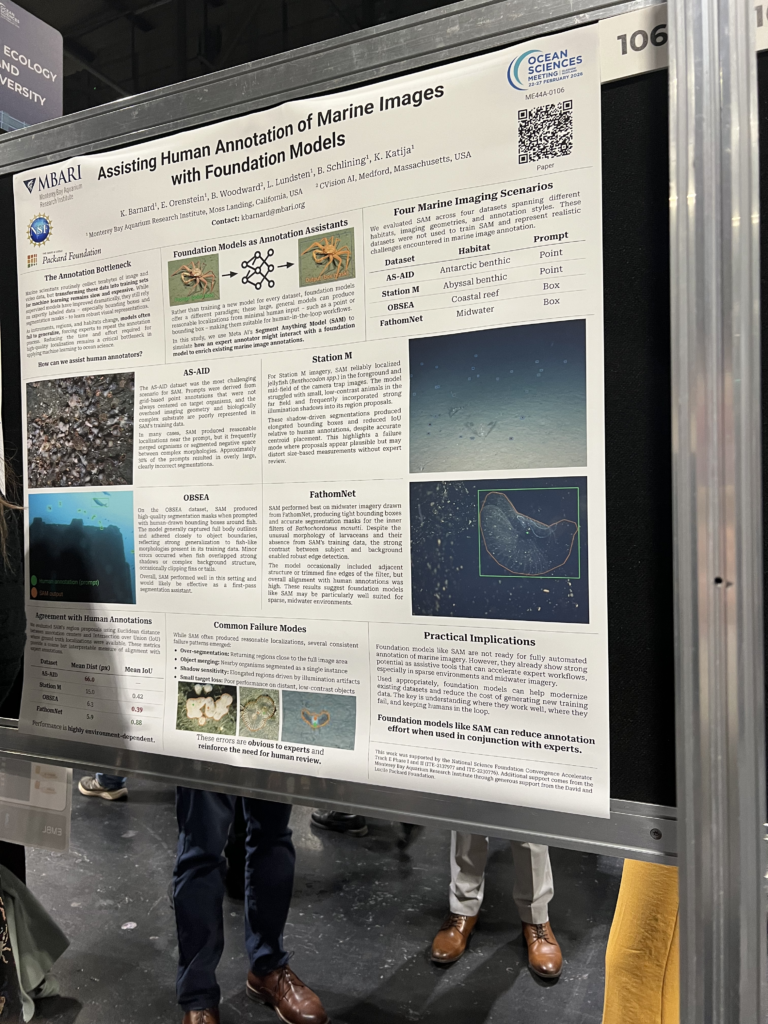
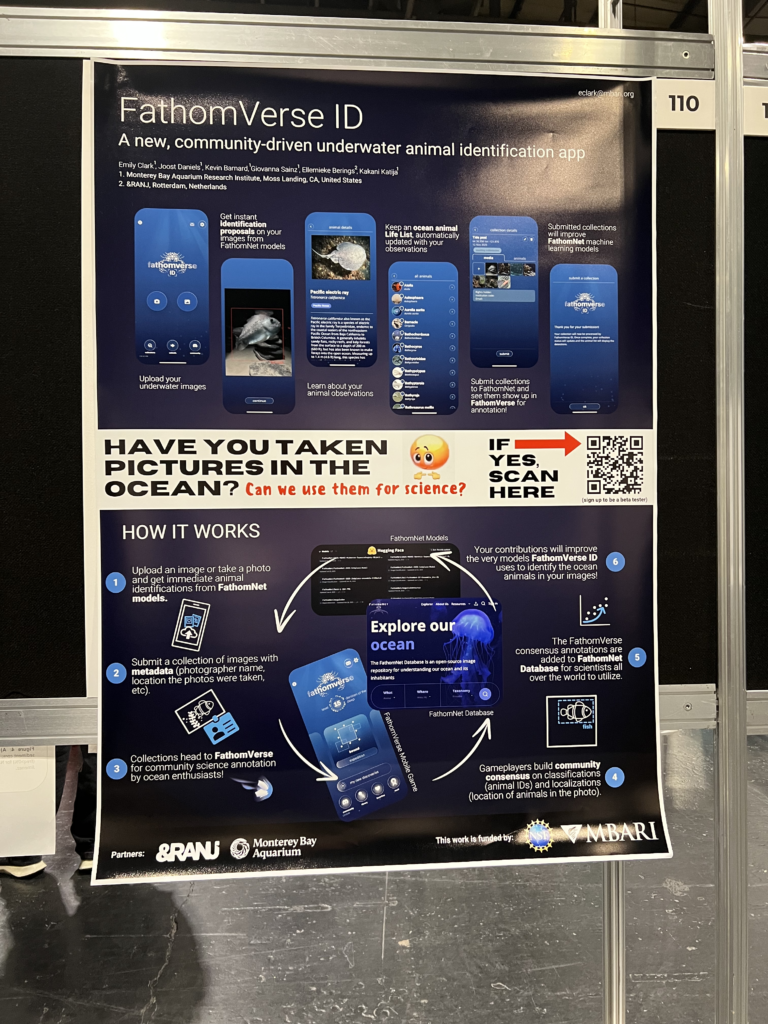
My abstract scored a poster at the eLightning session. This was a 90-minute session where the first half an hour featured 3-minute poster pitches from all 12 presenters, followed by a poster session. These posters were digital, meaning I got a big touchscreen to showcase my poster on. It was a part of the ‘Accelerating discovery in marine imagery with AI’ session, which also had a standard poster section and a presentation section. And while the projects varied, it was quite interesting how all of us are dealing with very similar problems, such as binary vs. multiclass classifiers, lack of labelled data, or trying to understand how the ML algorithms learn on underwater data. Photogrammetry was also commonly mentioned in this session; there were talks on estimating volume from 3D models and improving iceberg modelling.
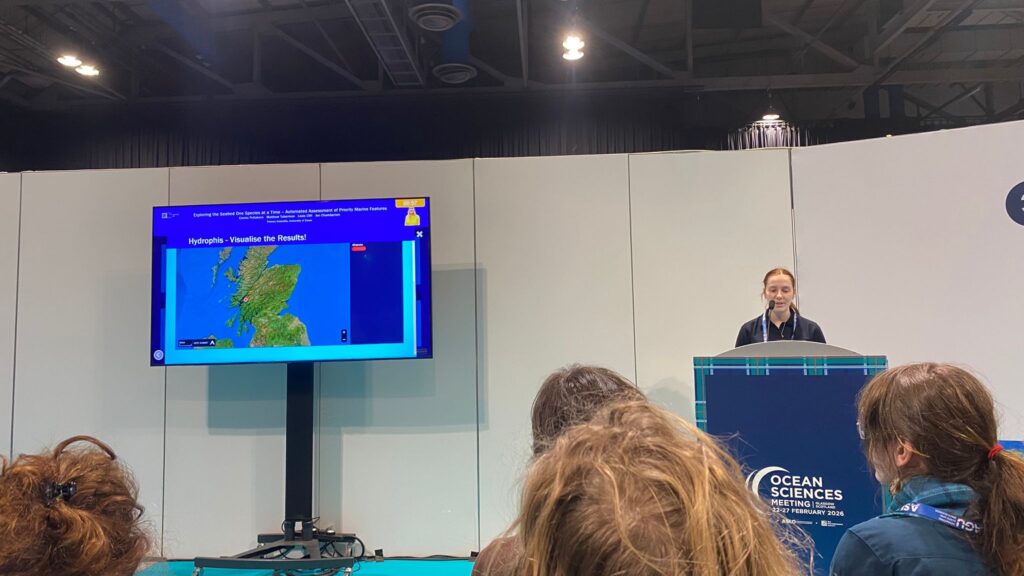
The marine imaging session was by far the most familiar one for me, but I also enjoyed the sessions on marine mammals, coral monitoring and talks on AI for oceanographic monitoring. A lot of research there still focused on images, but this was satellite imagery, rather than the standard camera photos. These were used, for example, to reconstruct the surface temperature. In the marine mammal sessions, I really enjoyed the Robots4Whales project that provides near real-time monitoring of whales in the area and alerts mariners to try to prevent boat-whale collisions.
Apart from academic sessions, you could also find a handful of sessions on career development. The two I went to were tips on publishing and how to write good peer reviews. The peer review session was pretty useful, as I haven’t reached the point where I start reviewing potential journal publications. It featured a list of things to look for when doing a review and categories to focus on. It also shared how to become a reviewer for a journal. The session on publication tips was more of a general overview than secret editor tips, and I felt the information shared was perhaps a little too basic.
The conference also featured an exhibitor section. There was a variety of stalls ranging from universities and research institutions, to sensor, ROV and AUV manufacturers. Commercial solutions for marine data labelling are starting to appear; YOLO remains a very popular object detection network for these applications. A little curiosity was the massage stall in the middle of this hall, where you could stop by if the conference perhaps got too exhausting.
Despite its size, the conference ran very smoothly from start to finish. This was definitely the largest conference I’ve had the opportunity to attend, and even though many of the topics were new to me, it helped me to be more aware of everything that is going on in ocean research.